LED vs LCD screen for events: which to choose?
Key takeaways
- ✦LCD stays razor-sharp even from 30 cm — no pixels, no module seams — so it suits exhibitions, conferences and shop windows.
- ✦LED only wins at very large formats: outdoor screens, concert stages and building facades where viewers stand far away.
- ✦VACANT's LCD screens run at 3000 nits, bright enough for any indoor setting, even beside a window in daylight.
- ✦LCD is plug-and-play on a wheeled stand; LED needs assembly and often technicians, which pushes total cost higher.
- ✦For most indoor events, LCD is the cleaner, simpler and cheaper choice.
VACANT provides digital screen rental in Riga — 65-inch 4K screens for events, exhibitions and conferences from €30/day.
LED vs LCD screen for events: where to start
An LED vs LCD screen for events is one of the first choices you face when planning an exhibition, conference, presentation or shop-window campaign. Both technologies produce a bright, high-quality image, but they were built for different jobs. The short answer is simple: LED shines where you need a huge format and an outdoor stage, while LCD almost always wins at indoor events where the viewer stands close. In this article we compare the two fairly, and in more depth than most, so you can choose correctly for your own event.
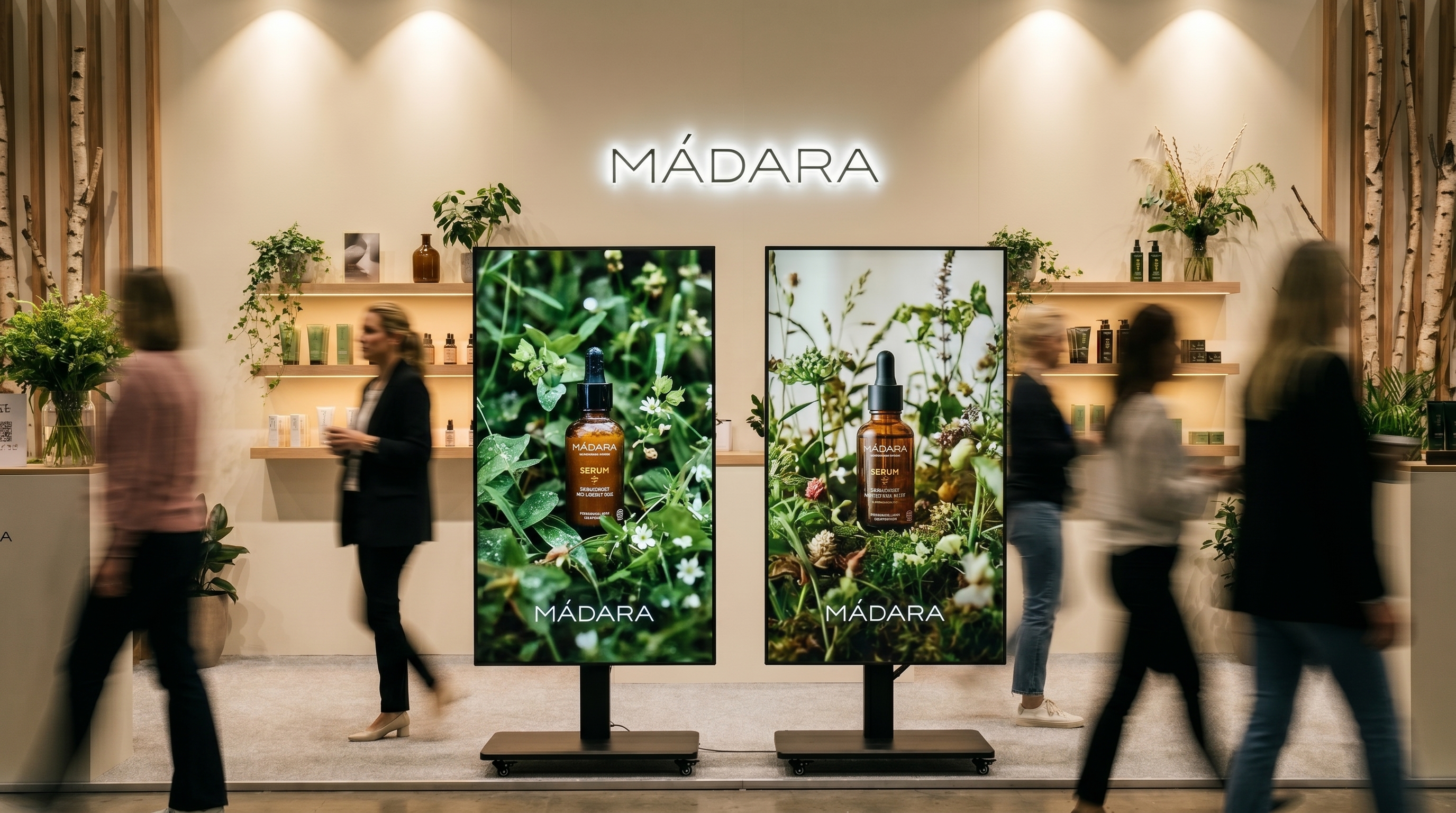
Quick comparison
| Criterion | LCD (e.g. VACANT 65" 4K) | LED video wall |
|---|---|---|
| Image up close | Sharp even at 30 cm, no visible pixels | Pixels and module seams show up close |
| Text and fine detail | 4K sharpness, readable small type | Better for large wording than fine text |
| Colours | Consistent, accurate (IPS) | Can vary between modules |
| Setup | Plug-and-play on a wheeled stand | Needs assembly, often technicians |
| Indoor brightness | 3000 nits — more than enough | Very high, sometimes too bright up close |
| Outdoor / large formats | Limited (not weatherproof) | Unbeatable, scales almost without limit |
| Rental cost | Lower, no installation | Higher + installation |
| Best use | Exhibitions, conferences, windows | Outdoor screens, concert stages |
What LCD is and where it shines
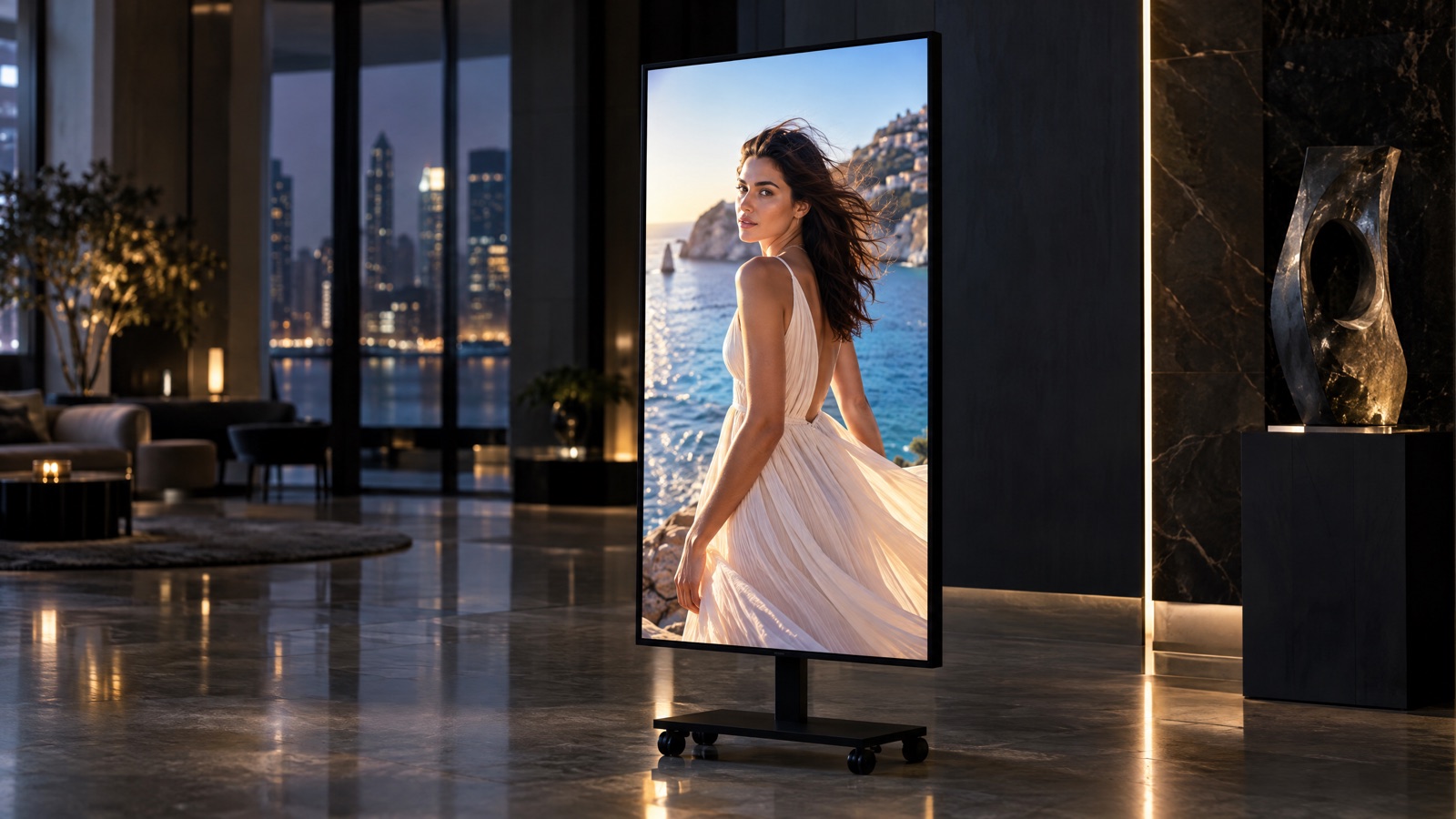
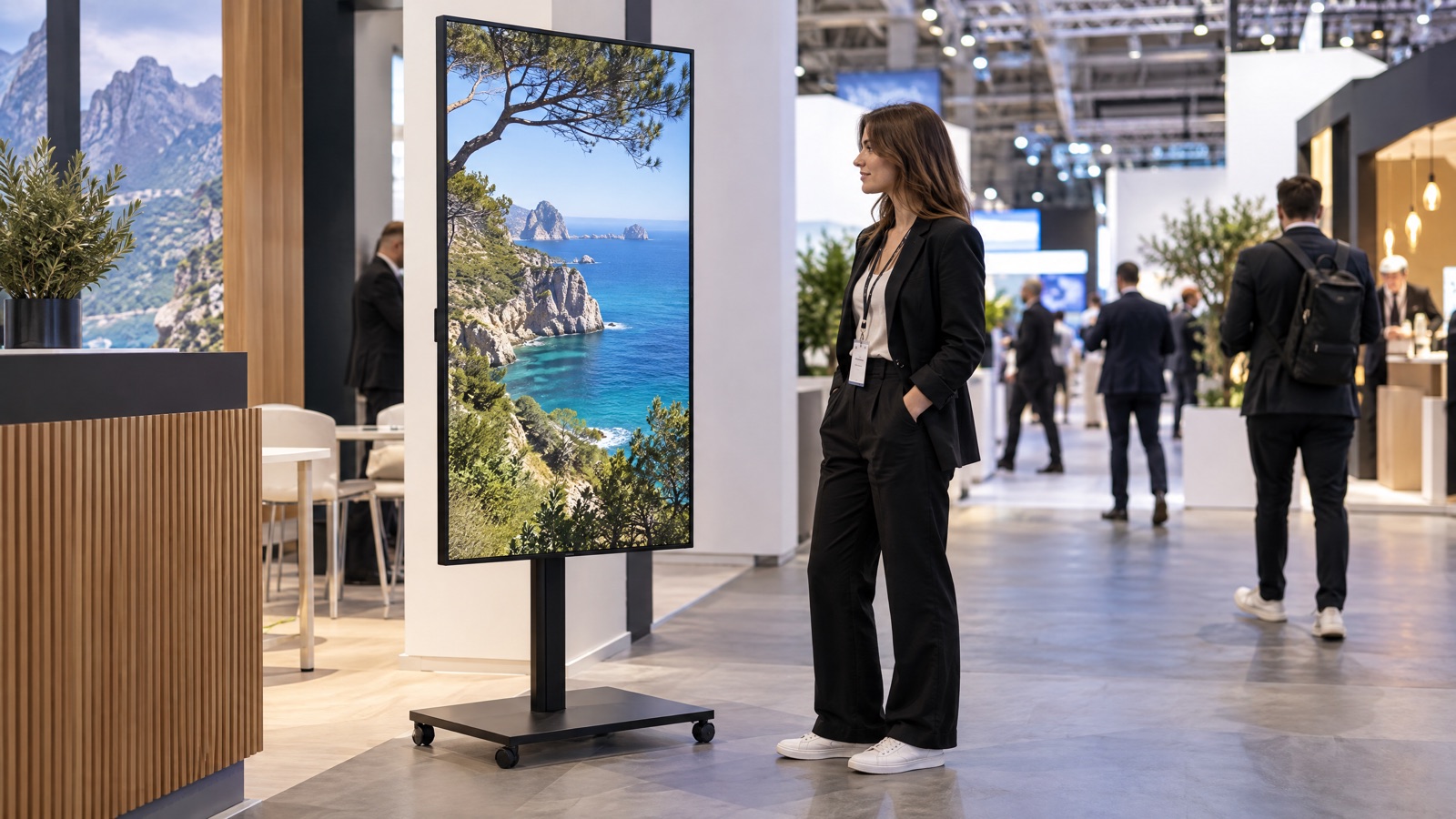
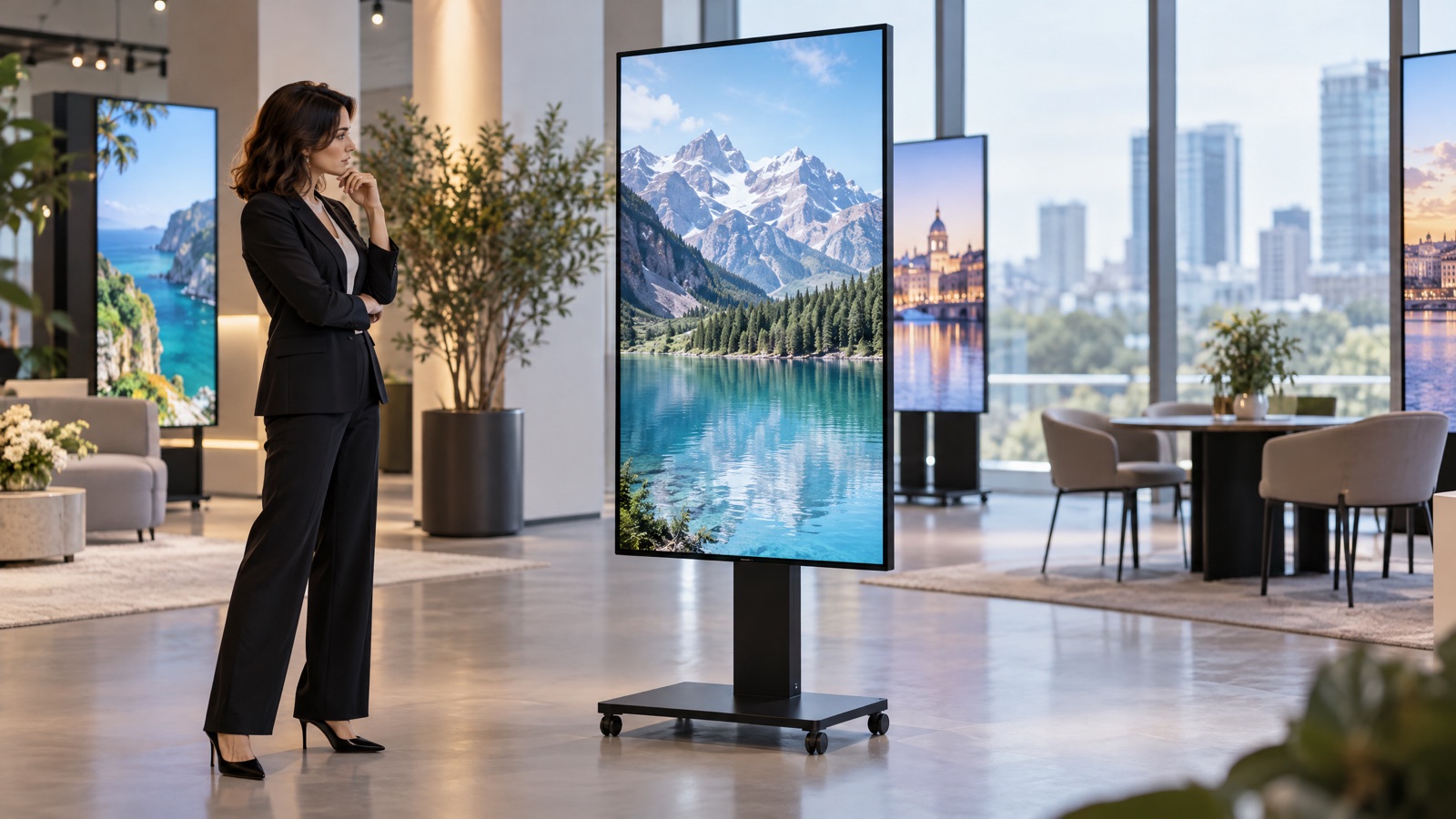
LCD is a single continuous panel — exactly like the 65-inch (165 cm) 4K UHD professional screen VCNT SL1 that VACANT rents. Its main advantage is a clean, uninterrupted image with no module seams at all. You can put your nose right up to the screen from 30 cm away and the picture is still sharp. The IPS panel delivers consistent, true-to-life colours from any viewing angle, and 4K resolution renders even small text and logos smoothly.
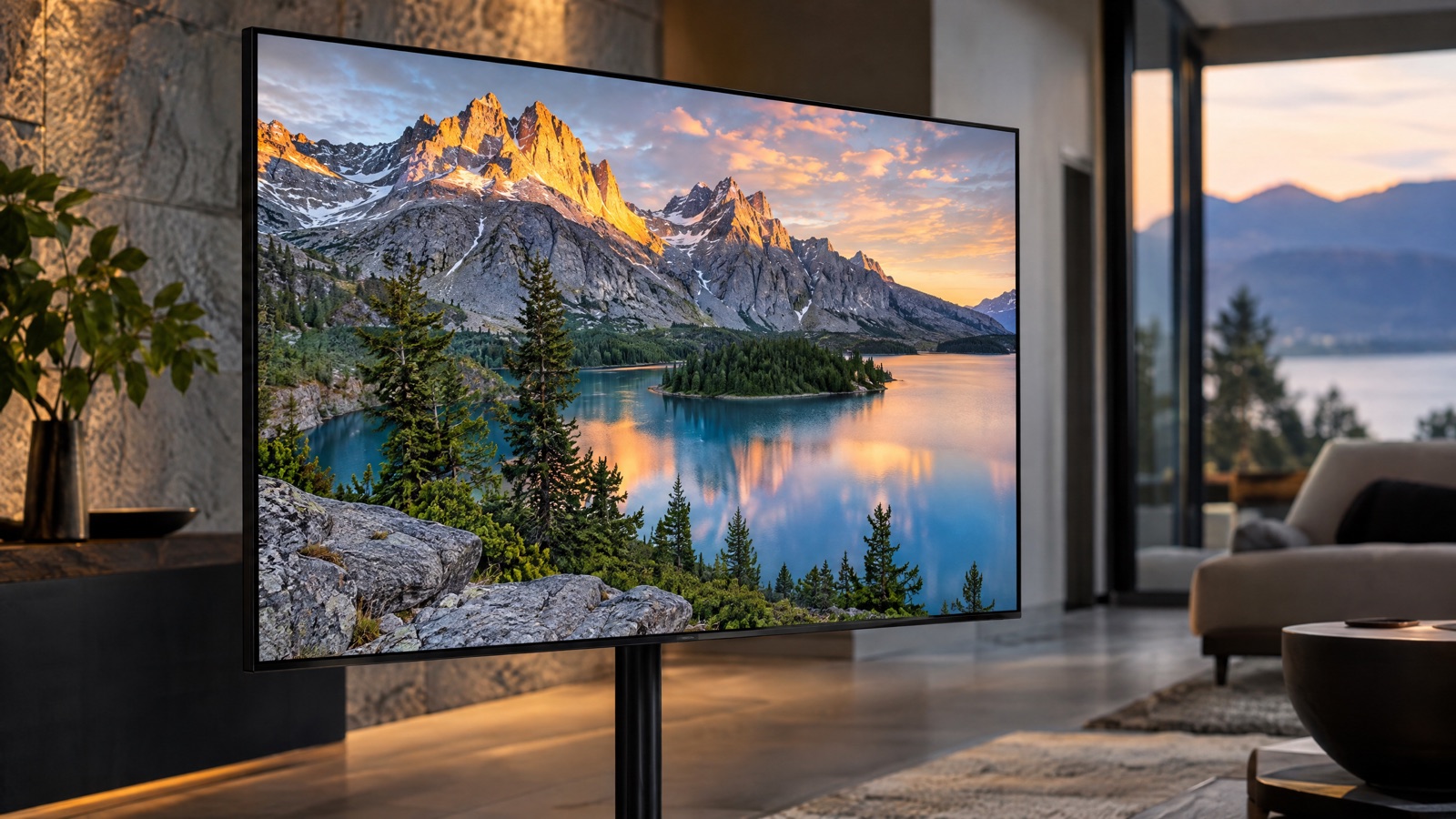
In practice that means LCD is ideal for exhibition stands, conferences, product presentations and shop windows — anywhere people stand close and look at detail. VACANT's screens are 3000 nits, which is very bright for the LCD class, so the image stays readable even next to a window in daylight. Another key plus: everything is plug-and-play. The screen arrives on a wheeled stand with HDMI and power, you switch it on and you're running — no install crew, no calibration, no technician invoice.
Simple test: if a viewer can reach out and touch the screen, you almost certainly want LCD.
If you're planning an event and want a simple solution, you can rent large screens from VACANT from a single day, and combine up to 10 identical screens into one wall when you need more surface.
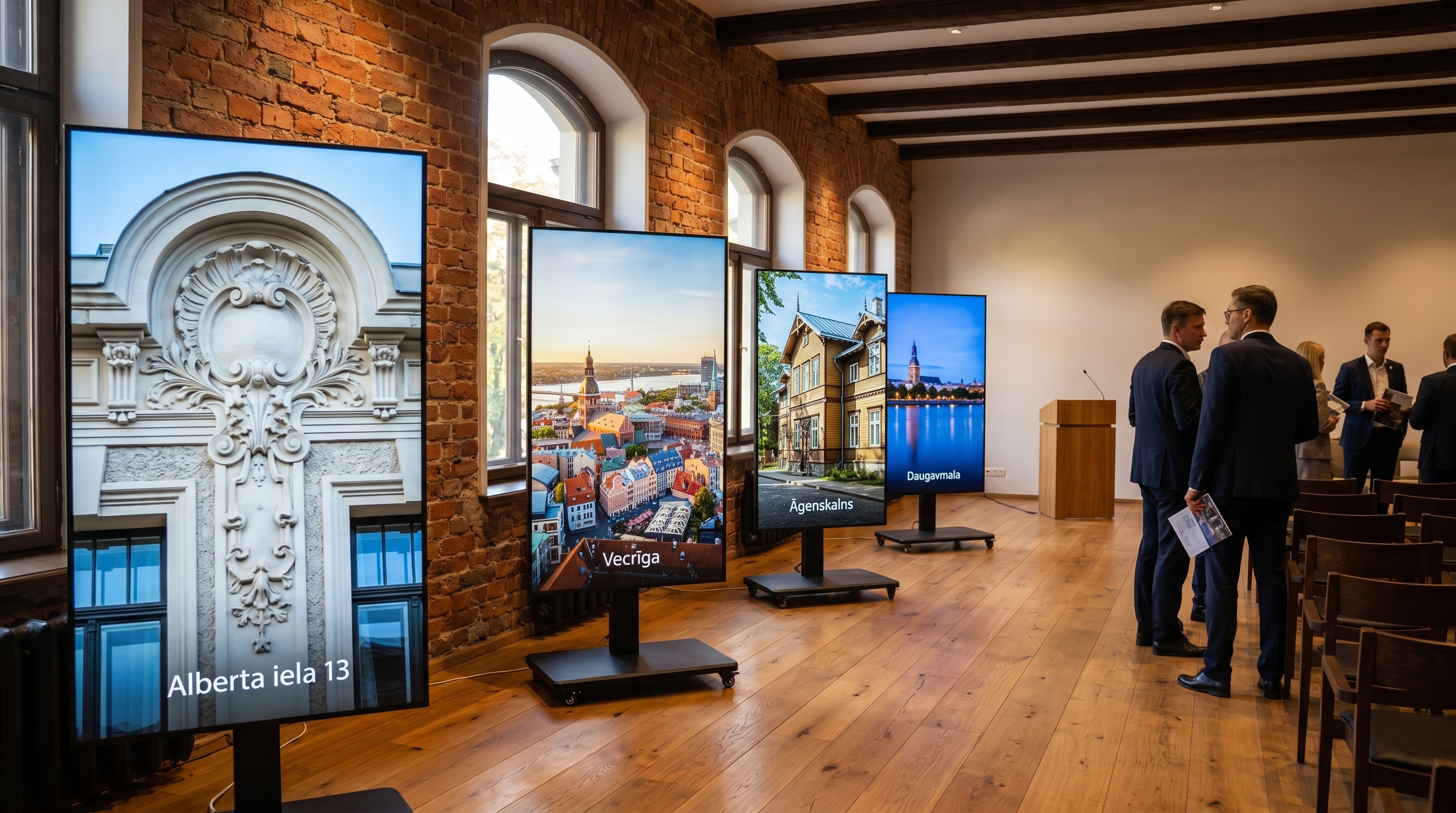
What LED is and where it shines
An LED video wall is built from separate modules that tile together like plates. That's exactly why LED is unbeatable at very large formats: huge outdoor screens, concert and festival stages, building facades. LED can be extremely bright, so it works even in direct sunlight where LCD would start to look weak. And because modules can be assembled into almost any size or shape, LED scales to places where a single panel simply wouldn't be enough.
Up close, though, LED shows its natural limits. From a short distance individual pixels and module joins become visible, and colours sometimes differ slightly between modules, especially across a large wall. An LED wall also has to be assembled, often with technicians, and the total cost including installation runs higher. All of that is perfectly reasonable for a big outdoor stage, but it's unnecessary complexity for an ordinary indoor event.
LED vs LCD screen for events: which to choose
Two things decide it — viewing distance and environment. If viewers will stand close (at an exhibition stand, in a conference hall, by a shop window or at a presentation), choose LCD. You get a sharper image, more accurate colours and far simpler logistics at a lower price. If instead you need a huge screen for an outdoor event or a concert stage where people stand tens of metres back, LED is the right call — and from that distance nobody notices the pixels.
For most indoor events, exhibitions and shop windows, LCD wins: it looks cleaner up close, and it's simpler and cheaper. LED stays king where you genuinely need a large outdoor format. So when you weigh an LED vs LCD screen for events, ask yourself one thing first: how close will the viewer stand to the screen?
Event type and recommended technology
| Event type | Recommended technology |
|---|---|
| Exhibition stand | LCD |
| Conference, presentation | LCD |
| Shop window | LCD |
| Indoor product launch | LCD |
| Outdoor concert stage | LED |
| Festival, stadium | LED |
| Building-facade advertising | LED |
How to match the screen to the event
A few concrete examples make the choice obvious. At an exhibition stand a visitor stands half a metre away reading your figures, prices and product names — classic LCD territory, where 4K sharpness and true colours help you sell. In a conference hall a single clean panel on a stand shows slides and video with none of the pixel grid an adjacent LED wall would reveal. For a shop window, LCD in vertical mode (the VCNT SL1 runs in 9:16 portrait) stops passers-by with a sharp, bright image, and its 3000 nits handle daylight on the glass with ease.
LED, meanwhile, earns its place elsewhere. A festival main stage seen from 40 metres, a sponsor ad wrapped around a building, or a stadium screen all need the scale and brightness only an LED video wall can deliver. The pattern is consistent: close and indoors leans LCD, far and outdoors leans LED. If you need a larger surface for a close-viewing event, combining several LCD panels into a wall keeps the seamless, detailed look while increasing the size — a convenient alternative to an LED wall indoors.
Cost and logistics: what each choice really costs
Beyond the image, total cost differs too. With LCD screen rental the price is transparent and linear: one daily rate per screen, with no separate installation fee. An LED wall usually comes with assembly, teardown, technician time and often transport for heavier gear — all justified for a big event, but for smaller indoor events it adds costs you don't really need.
On logistics, LCD is deliberately simple. The VACANT screen on its wheeled stand is self-pickup in Riga, rolls easily across a flat floor, and can be set up in a day with no outside crew. You can also budget it in seconds: the rate is per screen per day — from 50€ for 1–6 days, dropping to 40€ for 7–29 days and 30€ from 30 days, with optional insurance at +20€ per day (capped at 200€). An LED wall, by contrast, usually needs a quote that bundles the panels, the rigging, the labour and the schedule, which makes sense for a large production but is harder to pin down for a short indoor booking. That simplicity — together with the sharpness up close — is why, when you compare an LED vs LCD screen for events indoors, LCD so often turns out to be the smarter option.
It's also worth thinking about ambient light, because brightness is where the two are most often misjudged. LED's headline nit figures are built for full sun, and that ceiling is genuinely useful outdoors. Indoors, though, a 3000-nit LCD is already brighter than almost any room or shop window needs, and because the whole panel is one uniform surface, the brightness reads evenly across it. A large LED wall can look stunning from across a venue, but up close its intensity can be tiring for visitors leaning in to read a spec sheet. Matching the technology to the viewing distance keeps the image comfortable as well as sharp.
Conclusion: ready to rent a screen for your event?
When you compare an LED vs LCD screen for events, it comes down to distance and environment: close and indoors, choose LCD; far and outdoors, choose LED. If your event is indoors and viewers will be near the screen, VACANT's 65-inch 4K LCD screen is a simple, safe solution. Rental starts from 50€ per day (excl. VAT), with a wheeled stand, HDMI and power included, and you can combine up to 10 screens into one wall. Browse the available screens and rental terms here or message us on WhatsApp at +44 7397 311 066 — we'll help you pick the right setup for your event.
Frequently asked questions
What's better for an indoor event — LED or LCD?+
For most indoor events, exhibitions and shop windows an LCD screen is the better pick: the image stays sharp up close, colours are consistent, there are no visible module seams, and setup is simple. LED usually only wins at very large formats or on a stage.
How close can you stand to an LCD screen?+
You can view VACANT's 65-inch 4K LCD screen from as close as 30 cm and the image stays sharp. That's exactly why it fits exhibition stands, conferences and shop windows where people stand near the screen.
Isn't LED brighter than LCD?+
LED panels can be extremely bright and are unbeatable outdoors in direct sun. But VACANT's LCD screens run at 3000 nits, which is very bright for LCD and more than enough for any indoor setting, including next to a window in daylight.
Does LED show more detail than LCD?+
Not up close. LCD at 4K resolution shows smooth fine text and crisp detail, while an LED video wall reveals individual pixels from a short distance. At large outdoor formats, viewed from tens of metres, LED's detail is perfectly sufficient.
How much does LCD screen rental cost for an event in Riga?+
VACANT LCD screen rental starts from 50€ per day (1–6 days, excl. VAT), 40€ per day for 7–29 days and 30€ per day from 30 days. Each screen comes with a wheeled stand, HDMI and power.
Can several LCD screens be combined into one wall?+
Yes. With VACANT you can rent up to 10 identical 65-inch screens and combine them into a single seamless wall while keeping a sharp, detailed image — a convenient alternative to an LED wall for close-viewing events.
Need screens for your event?
65-inch 4K screens from €30/day. Transparent pricing, everything included, easy pickup in Riga.
See pricing & book →Marketing expert and founder of VACANT. Specialises in digital marketing and advertising, helping brands stand out with digital-screen campaigns.