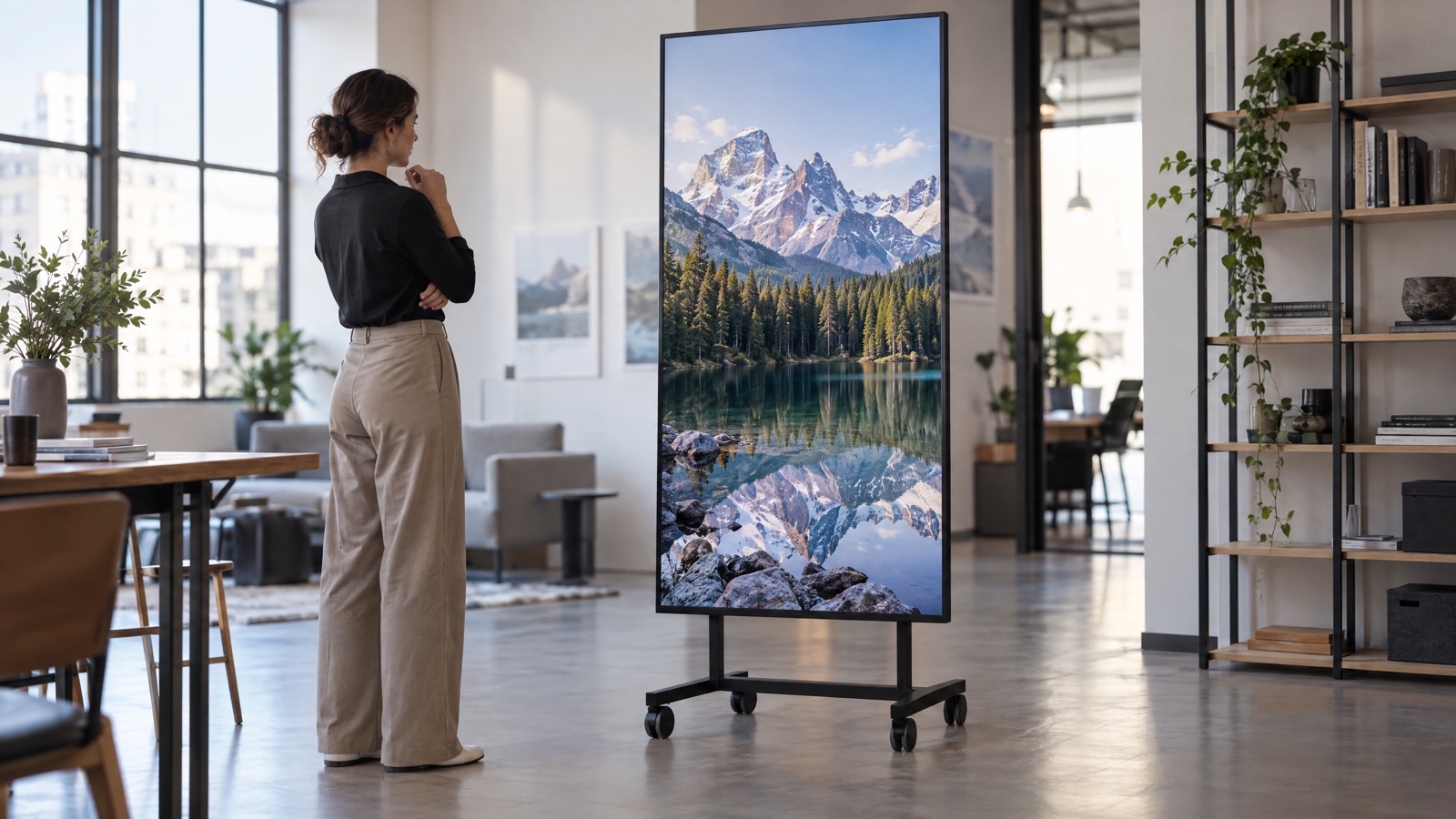
Rent or buy a screen: which is cheaper?
Key takeaways
- ✦Renting wins when you need a screen occasionally — for exhibitions, conferences and one-off events a few times a year.
- ✦Buying only pays off with very frequent, near-daily use, such as a permanent shop window or a showroom.
- ✦The true cost of buying is more than the screen price — add storage, transport, maintenance and technology obsolescence.
- ✦VACANT's 65-inch 4K LCD screen rental starts from 50€ per day, with a wheeled stand, HDMI and power included.
- ✦For most companies that use a screen a few times a year, renting is cheaper and simpler than buying.
VACANT provides digital screen rental in Riga — 65-inch 4K screens for events, exhibitions and conferences from €30/day.
Rent or buy a screen: where to start
Rent or buy a screen — it's a question almost everyone faces when they need a large display for an exhibition, conference, presentation or shop window. The first instinct is often to buy, because owning the screen seems cheaper in the long run. The truth is more nuanced: it all comes down to how often you'll actually use it. The short answer is simple — buying wins only at very frequent, near-daily use, while renting is almost always the better deal for anyone who needs a screen occasionally. In this article we compare both options fairly, including the hidden costs most people never think about.
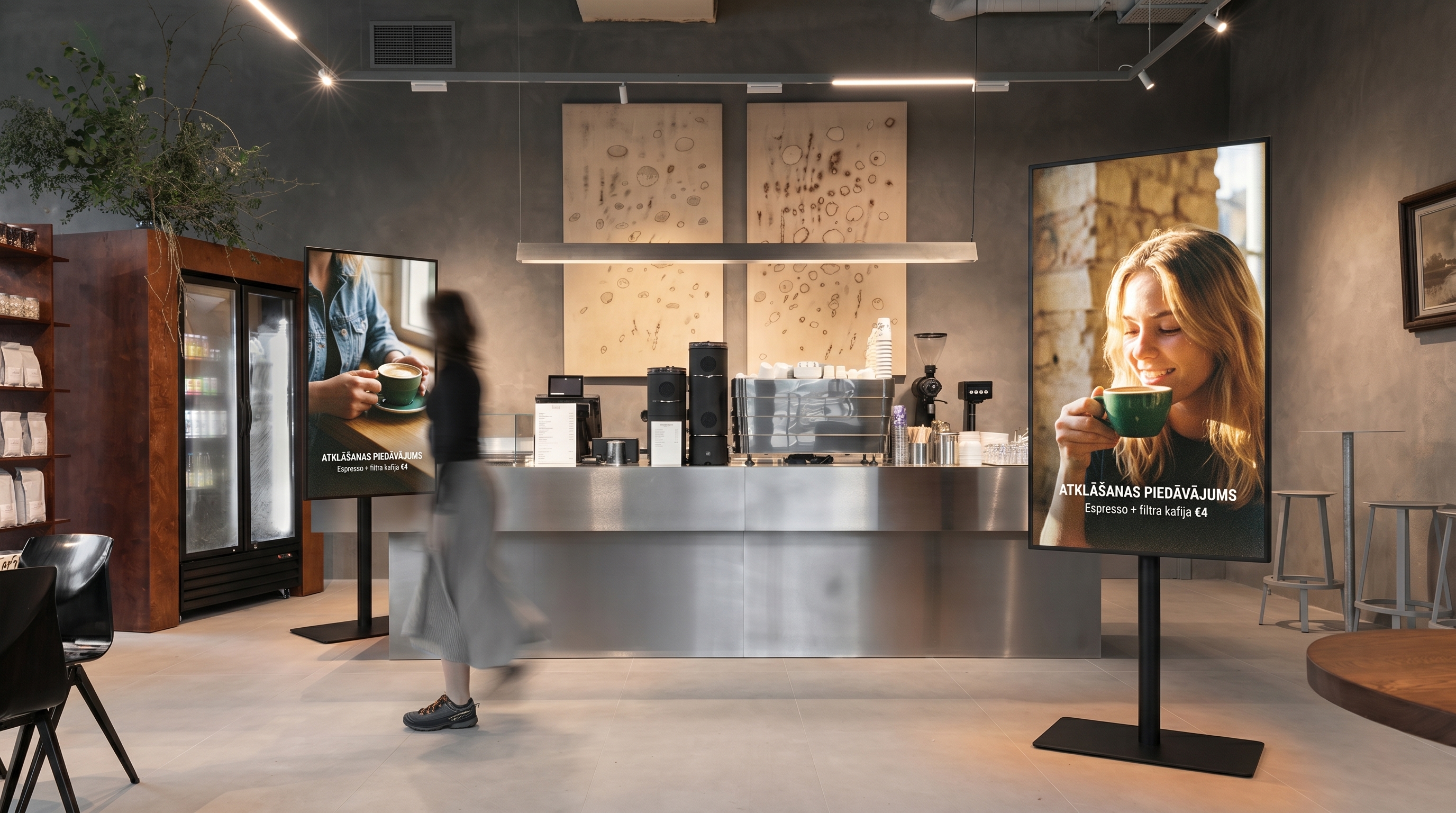
Quick comparison: renting vs buying
| Criterion | Renting (e.g. VACANT 65" 4K) | Buying |
|---|---|---|
| Upfront cost | 0€ — you pay only for the days | A large one-off sum straight away |
| Cost per use | Low and predictable, from 50€ per day | High at first, low only with frequent use |
| Storage | Not your problem | You find space between events |
| Transport | Self-pickup in Riga, on a wheeled stand | You arrange and pay for it every time |
| Maintenance and repair | Included, handled by the owner | Your responsibility and cost |
| Obsolescence | Always current technology | Dates in a few years, value drops |
| Best use | Occasional: events, exhibitions | Near-daily: permanent shop window |
When buying wins
Let's be honest: there are situations where buying is the right call. If the screen will run almost every day in the same spot — a permanent shop window, a company lobby, a showroom or a restaurant menu board — then a one-off purchase pays off over time. In that scenario the screen is stationary, you never move it, there's no storage to worry about between events, and the usage is intense enough that the cost per day of use drops very low.
Buying also makes sense when you need a very specific configuration you plan to use for years, or when the hardware is part of a product you resell. The key condition is frequency: the closer you get to continuous daily use, the stronger the case for ownership. If the screen will sit switched on eight hours a day, seven days a week, renting would end up costing more than buying — and then owning is the sensible move. There's also a control argument: when the screen is yours, it's always on hand, you can install it exactly how you like, and you never check availability with anyone. For a fixed, high-use setup that convenience is worth paying for, and it's the main reason some businesses still decide to rent or buy a screen in favour of buying.
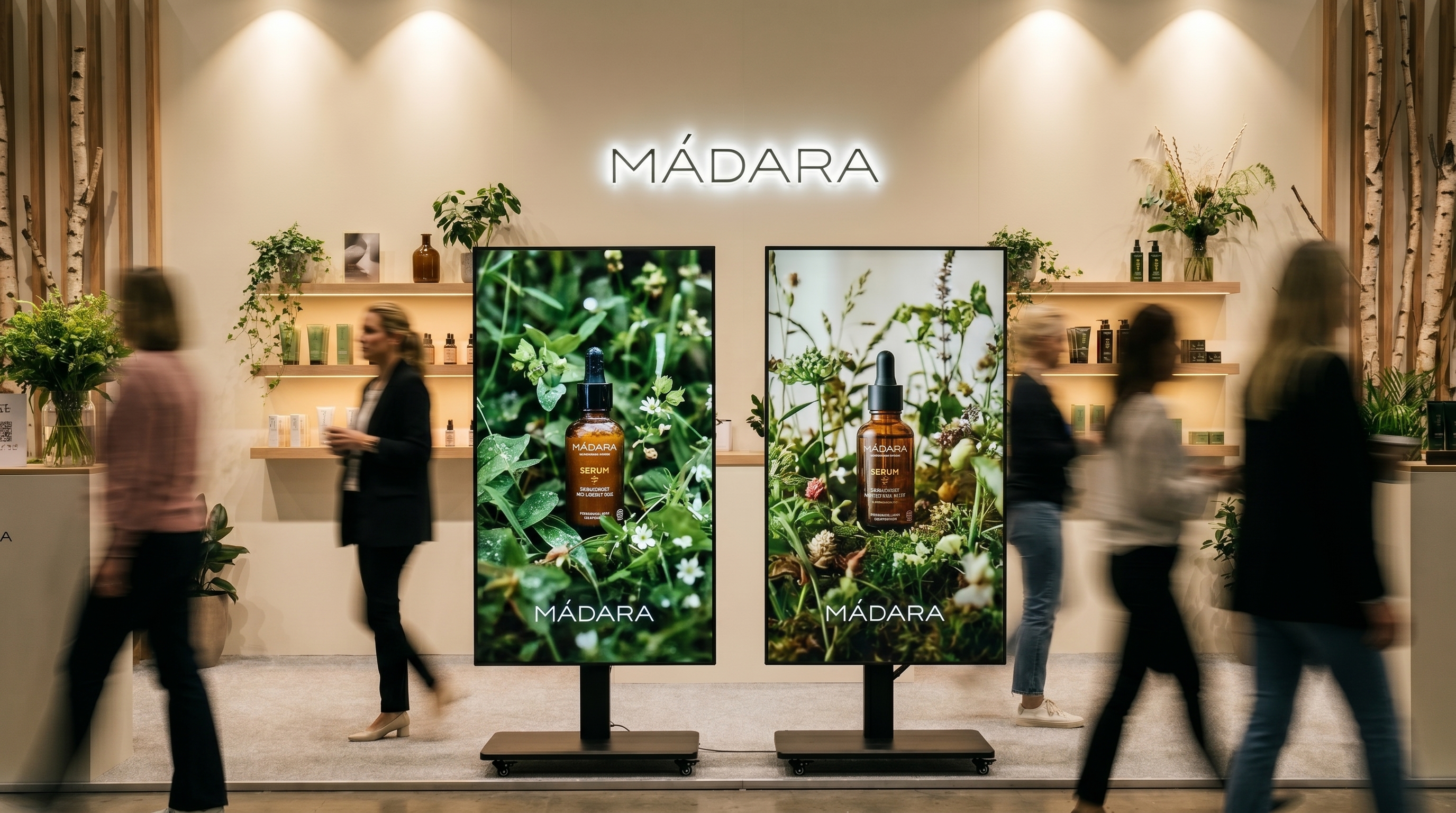
When renting wins
For most companies the reality looks completely different. You need a screen for an exhibition in spring, a conference in autumn and a couple of presentations in between — maybe ten or twenty days a year in total. That's exactly the rhythm where renting wins by a wide margin. You pay only for the days the screen actually works, and the rest of the time you never think about storage, maintenance or the technology dating.
Renting also wins on flexibility. One event needs a single screen, the next needs a wall of several. With VACANT you can rent up to 10 identical 65-inch 4K screens and combine them into one seamless wall, then hand them back. Buy the same number and you'd have ten expensive screens sitting in storage for most of the year. If you're planning an event and want a simple solution, you can rent large screens from VACANT from a single day.
Simple test: if you'll use the screen less than once a week, renting is almost certainly the cheaper choice.
Use case and recommended choice
| Use case | Recommended choice |
|---|---|
| Exhibition stand a few times a year | Renting |
| Conference or presentation | Renting |
| Short-term shop-window campaign | Renting |
| Permanent shop window | Buying |
| Showroom with daily content | Buying |
| Large one-off event with a screen wall | Renting |
Cost example: what each choice really costs
Take a typical company that needs a screen for two exhibitions and one conference a year — say ten days in total. Renting that works out to roughly 500€ a year (from 50€ per day, excl. VAT), and that price includes the wheeled stand, HDMI and power, with no extra hassle. Buying a professional 65-inch 4K commercial screen together with a stand typically costs several thousand euros upfront, and that's only the starting figure.
At ten days of use a year, buying would only break even after many years — and by then the screen would already be technologically dated. On top of that, you have to add the costs that keep running when you buy: storage space, transport to each event and back, and maintenance. Renting simply deletes those line items from the budget, because the screen's owner takes them on. That's exactly why, when you work out rent or buy a screen at a real company's pace, renting so often turns out to be the smarter option.
It's worth running the same sum against your own calendar before you decide. Count the days you genuinely expect the screen to be in use over the next year or two, multiply by the daily rate, and compare that honest figure against the purchase price plus storage, transport and the value you'll lose as the model ages. In most occasional-use cases the renting column stays smaller for a long time, and the gap only closes if your usage climbs toward daily. Framing rent or buy a screen as a per-day cost, rather than a one-time purchase, usually makes the right answer obvious.
Storage, transport and obsolescence
Three costs are underestimated in the buying calculation more than anything else. The first is storage. A large screen has to be kept somewhere between events — in a dry, safe place where it won't get knocked about — and that space either costs money or takes up room you could use for something else. With renting, the screen simply returns to the owner after the event, and the problem disappears entirely.
The second is transport and handling. When you buy, you arrange every single time how to get the screen to the venue and back, and who will carry it. The VACANT screen is self-pickup in Riga on its wheeled stand, rolls easily across a flat floor, and goes back at the end of the event — no logistics headaches. The third and most often overlooked is obsolescence. Screen technology keeps moving, and after a few years a bought screen is an older model whose value has dropped noticeably and which you can only resell at a loss. Rent, and you get current, maintained hardware every time, while the obsolescence risk stays with the owner. If you need to check prices or availability, message us on WhatsApp at +44 7397 311 066.
Conclusion: how to decide in your case
When you compare rent or buy a screen, it all comes down to one question — how often you'll actually use it. If it will run almost every day in one place, buying pays off over time. But if you need a screen occasionally — for exhibitions, conferences and one-off events a few times a year, renting is cheaper, simpler and free of the hidden costs of storage, transport and obsolescence. VACANT's 65-inch 4K LCD screen rental starts from 50€ per day (excl. VAT), with a wheeled stand, HDMI and power included, and you can combine up to 10 screens into one wall. Browse the available screens and rental terms here or message us on WhatsApp at +44 7397 311 066 — we'll help you work out which choice is cheaper for you.
Frequently asked questions
Is it cheaper to rent or buy a screen?+
It depends on how often you'll use it. If you need a screen a few times a year for exhibitions, conferences or events, renting is cheaper and simpler. Buying only pays off when the screen runs almost every day, such as in a permanent shop window or a showroom.
How often do you need to use a screen for buying to pay off?+
A general rule of thumb: if the screen is used only a few dozen days a year, renting almost always costs less because you avoid paying for storage, transport, maintenance and obsolescence. At very frequent, near-continuous use, buying starts to win.
What are the hidden costs of buying a screen?+
Beyond the screen price you have to account for a stand or mount, storage space between events, transport and the people to move it, plus maintenance and repairs. After a few years the technology also dates, and reselling it usually means a big drop in value.
How much does screen rental cost for an event in Riga?+
VACANT 65-inch 4K LCD screen rental starts from 50€ per day (1–6 days, excl. VAT), 40€ per day for 7–29 days and 30€ per day from 30 days. Each screen comes with a wheeled stand, HDMI and power.
Can you rent several screens for a larger event?+
Yes. With VACANT you can rent up to 10 identical 65-inch 4K screens and combine them into one wall. It's a flexible alternative to buying several screens when you only need them for occasional large events.
Is a rented screen as good as a bought one?+
Yes — technically it's the same professional screen. VACANT rents the 65-inch (165 cm) 4K UHD professional screen VCNT SL1 with 3000-nit brightness and an IPS panel. Renting gets you the same quality without the burdens of ownership.
Need screens for your event?
65-inch 4K screens from €30/day. Transparent pricing, everything included, easy pickup in Riga.
See pricing & book →Marketing expert and founder of VACANT. Specialises in digital marketing and advertising, helping brands stand out with digital-screen campaigns.