How many nits of brightness do you need? Full guide
Key takeaways
- ✦A nit (cd/m²) is the unit of brightness — the brighter the setting, the more nits you need to keep the image readable.
- ✦A home TV is only 300–500 nits, because it's watched in a controlled, fairly dark room.
- ✦A bright room needs 500–800 nits, a room by a window 1000–1500, and a shop window in daylight 2500–3500 nits.
- ✦VACANT screens run at 3000 nits — the brightest rental screens in the Baltics — plenty for any indoor setting, even beside a window.
- ✦Direct outdoor sun needs 5000+ nits; indoors and in shop windows, 3000 nits is more than enough.
VACANT provides digital screen rental in Riga — 65-inch 4K screens for events, exhibitions and conferences from €30/day.
How many nits of brightness do you need: the short answer
How many nits of brightness do you need comes down to one thing — how much light there is in the space where the screen will stand. A home TV in a dim living room is fine at 300–500 nits, a bright office works at 500–800 nits, while a shop window behind glass in daylight or an event beside a window needs 2500–3500 nits. A nit is the unit of screen brightness, and the principle is simple: the brighter the setting, the more nits you need to keep the image readable. In this article we explain what nits are, how many you need in each situation, and why VACANT's 3000-nit screens are bright enough for virtually any environment.
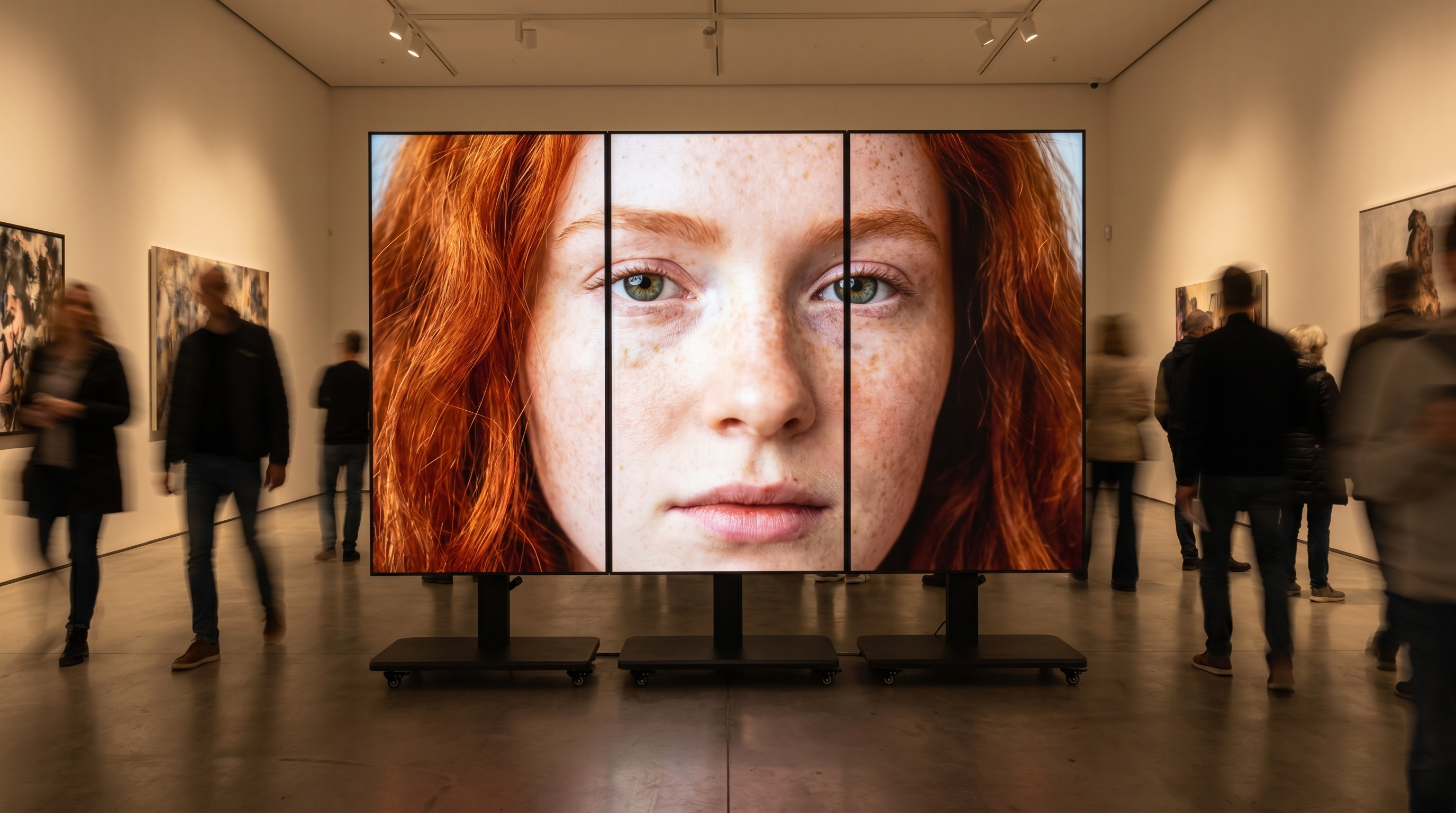
Recommended brightness by setting
| Setting | Recommended brightness (nits) |
|---|---|
| Dark room, home cinema | 250–350 |
| Home living room, normal TV | 300–500 |
| Bright office, conference hall | 500–800 |
| Room beside a window, indirect daylight | 1000–1500 |
| Shop window behind glass in daylight | 2500–3500 |
| Outdoor screen in shade | 2500–4000 |
| Outdoor screen in direct sun | 5000+ |
What nits are and what they mean
A nit (often written as cd/m²) is the unit of screen brightness — how much light a display emits per square metre of its surface. The higher the nit count, the brighter the screen and the better it can "beat" the surrounding light. The principle is simple: an image only looks clear when the screen is brighter than the light falling on it. In a dark room a modest brightness is plenty, but as soon as daylight or bright ceiling lights appear, a low-brightness screen looks washed out, flat and hard to read.
That's why the question of how many nits of brightness do you need can never be answered in the abstract — you always have to ask first where the screen will stand. A typical home TV is 300–500 nits because it's watched in a fairly dark, controlled setting. A professional shop-window or event screen tends to be six to ten times brighter, because it has to compete with daylight, street lighting and reflections on glass. Both are "bright" in their context, but they're built for completely different light.
One more thing worth knowing: not all nit figures mean the same thing. Many consumer TVs advertise a "peak" brightness the panel can only hit on a small patch for a brief moment, not across the whole screen continuously. A professional screen's 3000 nits is full-surface, sustained brightness — the figure you'll actually see for the entire event, not a number on the box. That's exactly why, when you compare screens, it matters whether you're reading a short-lived peak or genuinely steady brightness.

300–500 nits: home TVs and dark rooms
Most home TVs run in the 300–500 nit range, and that's perfectly enough. A living room can usually be dimmed, the curtains drawn, and watched in the evening, so the screen doesn't have to fight strong light. In a home cinema, where the room is deliberately darkened, even less is ideal — 250–350 nits give deep blacks and an easy-on-the-eyes picture. In these settings more brightness wouldn't improve anything; it would only tire the eyes.
The problem starts when you move that same screen into a bright environment. Put a 400-nit TV opposite a window or in a bright office and the picture dims, the colours fade, and reflections appear on the glossy surface. This is exactly where many people go wrong, thinking "a TV is a screen too" — but a TV is optimised for a dark room, not a public, well-lit space.
Bright rooms, windows and daylight
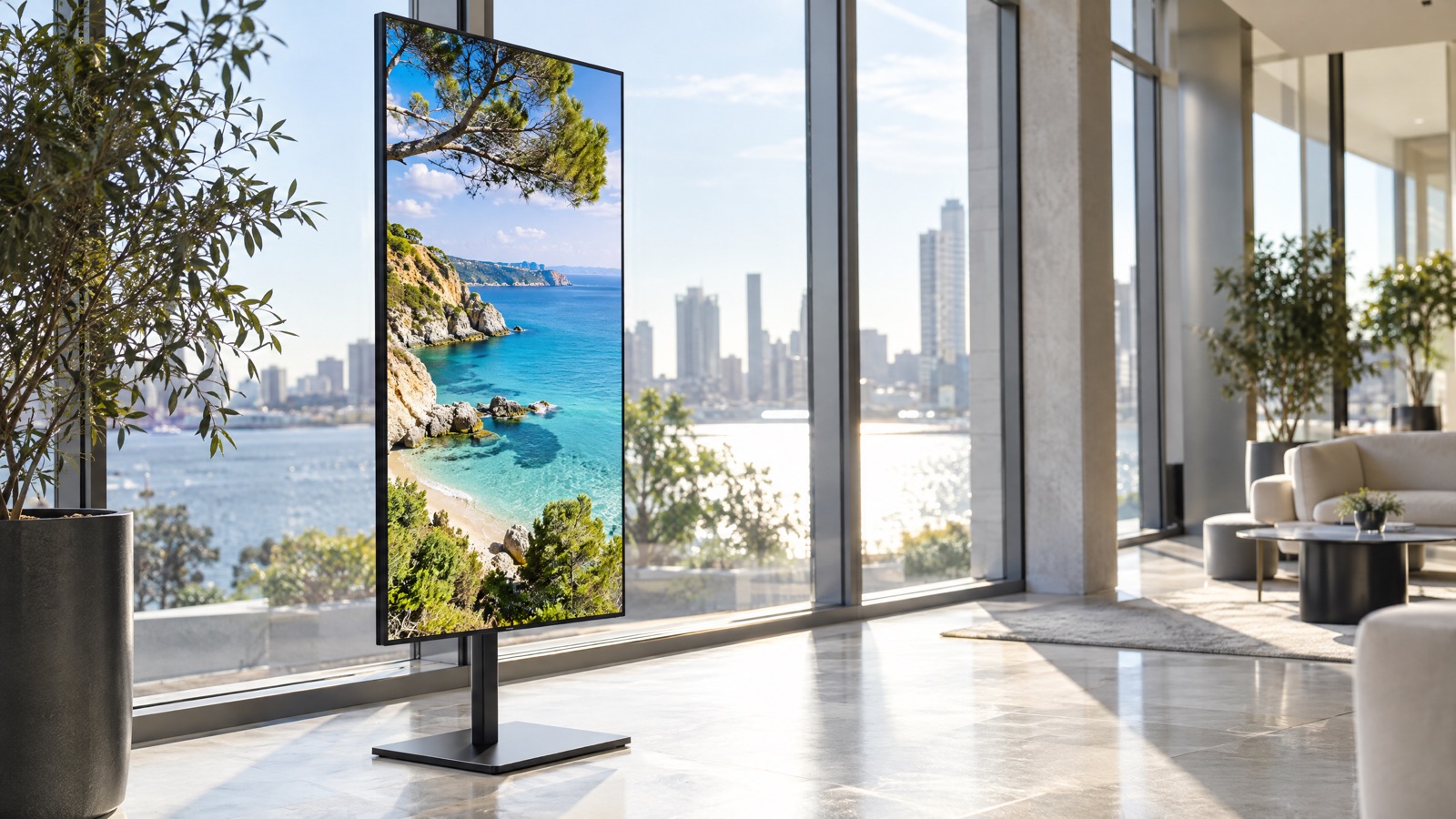
As soon as natural light enters a room, the requirements climb fast. A bright open-plan office or a conference hall with large windows already needs 500–800 nits to keep slides and video looking contrasty. If the screen stands right by a window or opposite one, with indirect daylight, a safe choice is 1000–1500 nits. The closer to the light source and the bigger the windows, the more nits you need so the image doesn't get lost.
Rule of thumb: a screen should be at least as bright as the light falling on it — otherwise the viewer sees more reflection than content.
So if you're planning an exhibition, conference or presentation in a bright room, you can rent bright 3000-nit screens from VACANT and stop worrying about whether the image will be readable — the margin is so large that the screen looks excellent even in the brightest corner.
Why a shop window needs even more nits
A shop window is the toughest setting of all. The screen sits behind glass, faces outward, and has to fight direct daylight, street reflections and the sky mirrored in the glass. An ordinary TV becomes nearly invisible here by midday. For the image to stop passers-by even on a sunny day, a window screen needs 2500–3500 nits. That's why professional shop-window screens, VACANT's included, are built with that brightness — they punch through the glass and light rather than dissolve into it.
3000 nits: how many nits of brightness do you need in a window and at an event
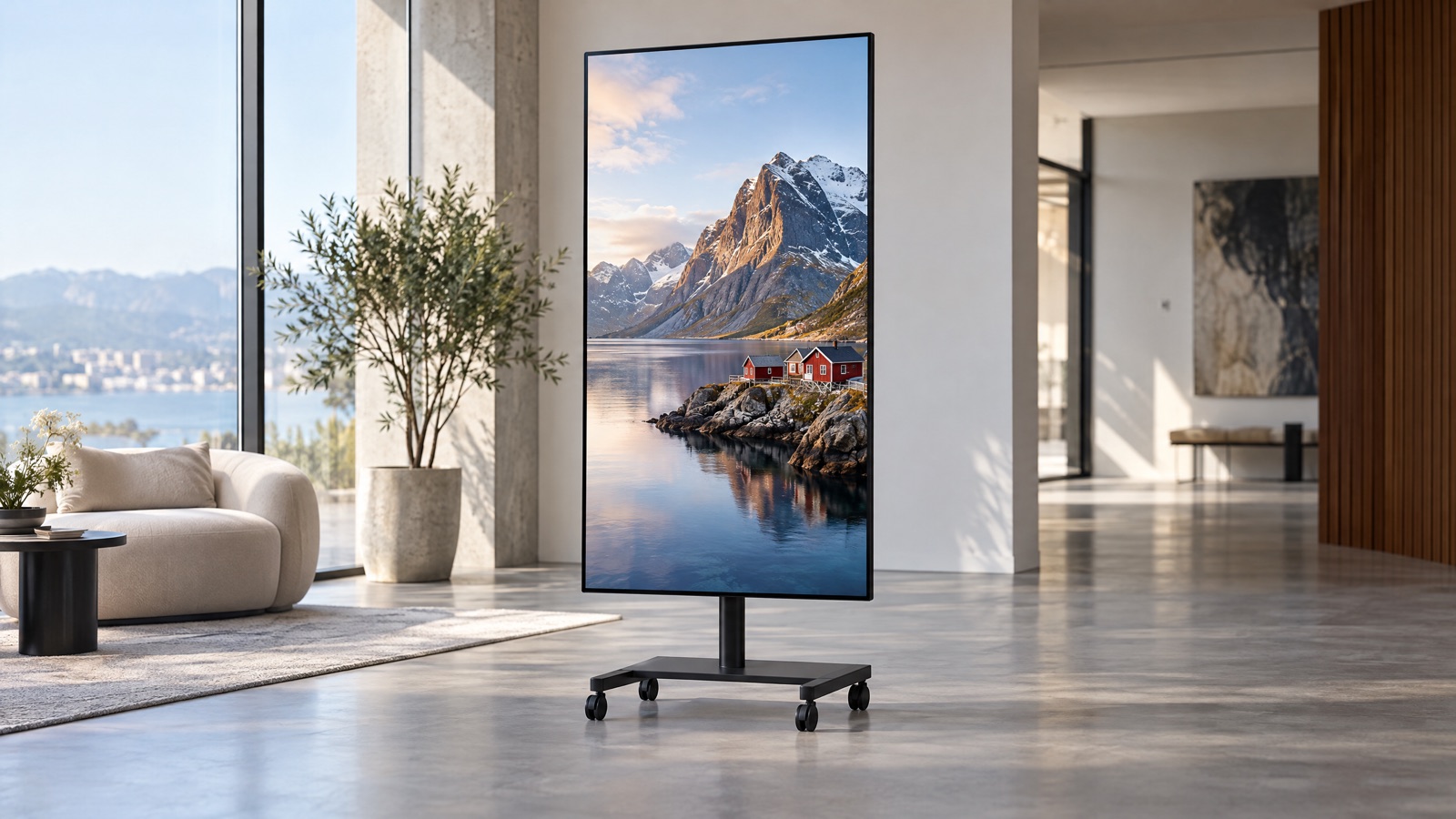
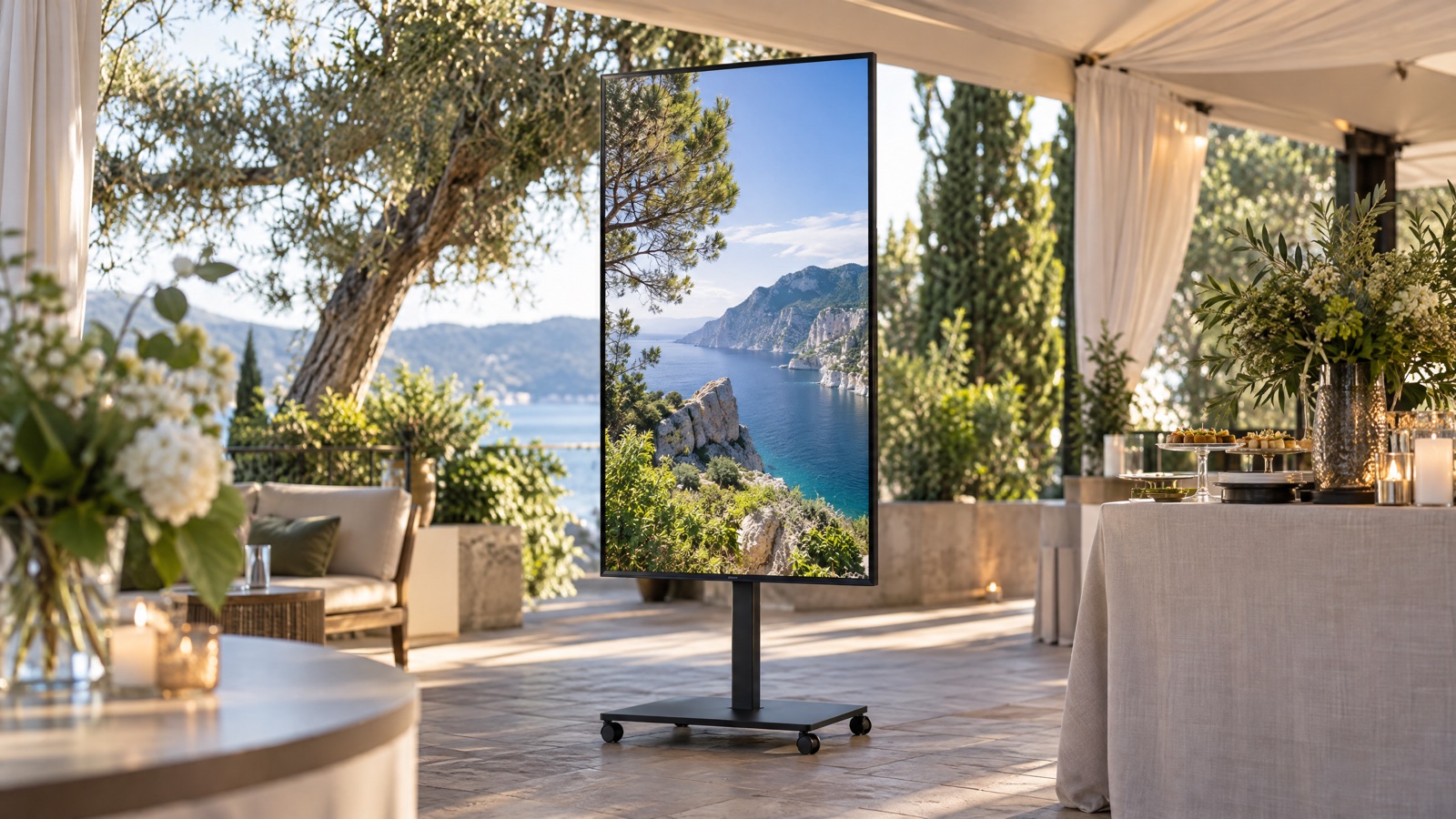
Here we answer the main question directly — how many nits of brightness do you need for a public, bright setting. In practice the answer is 3000 nits, and that's exactly how bright VACANT's 65-inch 4K screens are. That's roughly six to ten times more than a normal home TV, and it covers the whole indoor range with plenty to spare: bright conference halls, exhibition stands, events beside windows and shop windows behind glass in daylight. VACANT's 3000-nit screens are the brightest rental screens in the Baltics, so brightness is one thing you no longer have to think about — there will always be more than enough.
The margin matters in practice, too. A screen often doesn't end up in the ideal spot: it can land opposite an unplanned window, under a bright light fitting, or in a sunny corner. With 3000 nits those surprises are no longer a problem — the image stays contrasty and readable wherever the screen finally goes. For a low-brightness screen, the same spot would mean a washed-out, hard-to-read picture and disappointed viewers.
How to pick the right brightness for your event
The practical path is simple. First assess the setting: how bright is the corner, are there windows nearby, will the screen stand opposite daylight. Then compare with the table above and choose a brightness with a little headroom on top — it never hurts for a screen to be slightly brighter than needed. For indoor events and shop windows, 3000 nits is a safe, universal choice that works almost everywhere.
The only place 3000 nits might fall short is an open outdoor plaza in the middle of a sunny day — there you need specialised outdoor screens of 5000+ nits. But for most event organisers in Riga the setting is indoors, on stands and in shop windows, and there the question of how many nits of brightness do you need answers itself: 3000 nits covers everything needed with a large margin, and the image looks professional in any light.
Conclusion: ready to rent a bright screen?
When you think about how many nits of brightness do you need, it all comes down to the setting: a dark room is fine at 300–500 nits, a bright room needs 500–800, a room by a window 1000–1500, and a shop window or event in daylight 2500–3500 nits. VACANT's 65-inch 4K screens are 3000 nits, the brightest rental screens in the Baltics, so they handle any indoor setting with room to spare. Rental starts from 50€ per day (excl. VAT), with a wheeled stand, HDMI and power included, and you can combine up to 10 screens into one wall. Browse the available screens and rental terms here or message us on WhatsApp at +44 7397 311 066 — we'll help you pick the right setup for your event.
Frequently asked questions
How many nits of brightness do you need indoors?+
A dark room needs just 250–350 nits, an ordinary living room 300–500, a bright office or conference hall 500–800, and a room beside a window with daylight 1000–1500 nits. A VACANT 3000-nit screen handles any of these with a large margin to spare.
How many nits does a normal home TV have?+
Most home TVs are 300–500 nits. That's enough because a TV is watched in a controlled, fairly dark room. In a bright room or opposite a window, such a screen already looks washed out and flat.
How many nits does a shop window screen need?+
A shop window behind glass in daylight needs 2500–3500 nits so the image can beat reflections on the glass and street light. That's exactly why VACANT's shop-window screens are 3000 nits — bright enough to stop passers-by even on a sunny day.
Is 3000 nits a lot for a screen?+
Yes. 3000 nits is very high brightness — roughly six to ten times more than a home TV. It's more than enough for any indoor setting or shop window, and VACANT's 3000-nit screens are the brightest rental screens in the Baltics.
How many nits does a screen need for an outdoor event?+
An outdoor screen in shade needs 2500–4000 nits, while direct sun calls for 5000 nits and up. A 3000-nit indoor and shop-window screen is built for bright interiors and glass windows, not open sun in the middle of the day.
How much does bright screen rental cost in Riga?+
VACANT 65-inch 4K screen rental starts from 50€ per day (1–6 days, excl. VAT), 40€ per day for 7–29 days and 30€ per day from 30 days. Each 3000-nit screen comes with a wheeled stand, HDMI and power.
Need screens for your event?
65-inch 4K screens from €30/day. Transparent pricing, everything included, easy pickup in Riga.
See pricing & book →Marketing expert and founder of VACANT. Specialises in digital marketing and advertising, helping brands stand out with digital-screen campaigns.